

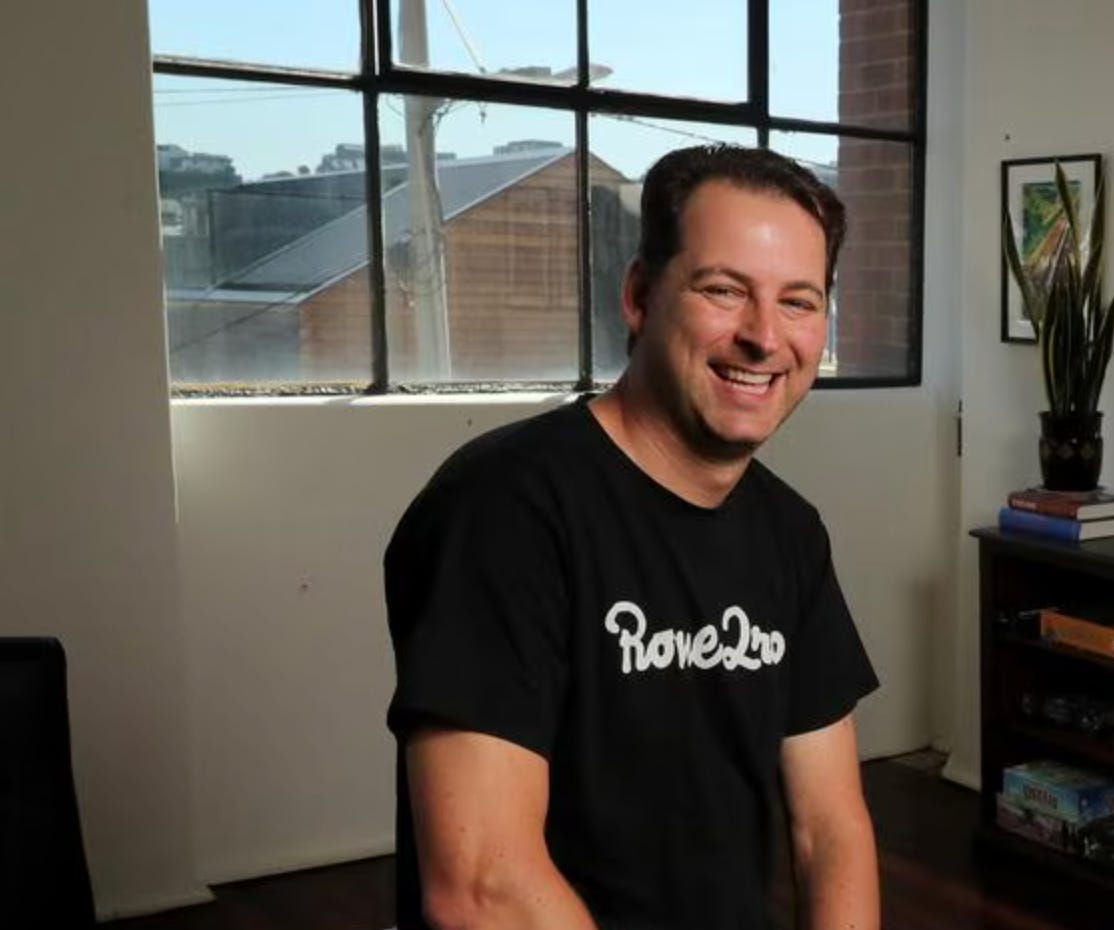
Michael Cameron co-founded Rome2Rio, building it into one of the world’s most loved travel platforms. In this story we dive into:
Walking away from Microsoft to do a startup
How it took three years before it felt like it was working
The struggles of fundraising in an ecosystem that was just finding its feet
Responding to an SEO crisis that almost crushed the business
Dealing with founder burnout
The Rome2Rio Story
SH: Tell me who Michael Cameron is in 30 seconds or less.
MC: I was a software engineer. I studied computer science, then went on to work on the Bing search engine at Microsoft. After that I met Bernie in Seattle and we went and started the Rome2Rio business in 2010. Over nine years we grew from just the two of us to a team of 80 people, and then sold at the end of 2019. Super proud of what we built. I’ve always loved travel, and it was a business that solved a real pain point. I still use the product to get around today.
SH: What was Rome2Rio, exactly?
MC: Rome2Rio is what we called a multimodal door-to-door travel search engine. It shows you all the possible ways to get from one place to another. Train, bus, ferry, flight, every mode of transport. It fits somewhere in the intersection of Google Maps and a travel search engine.
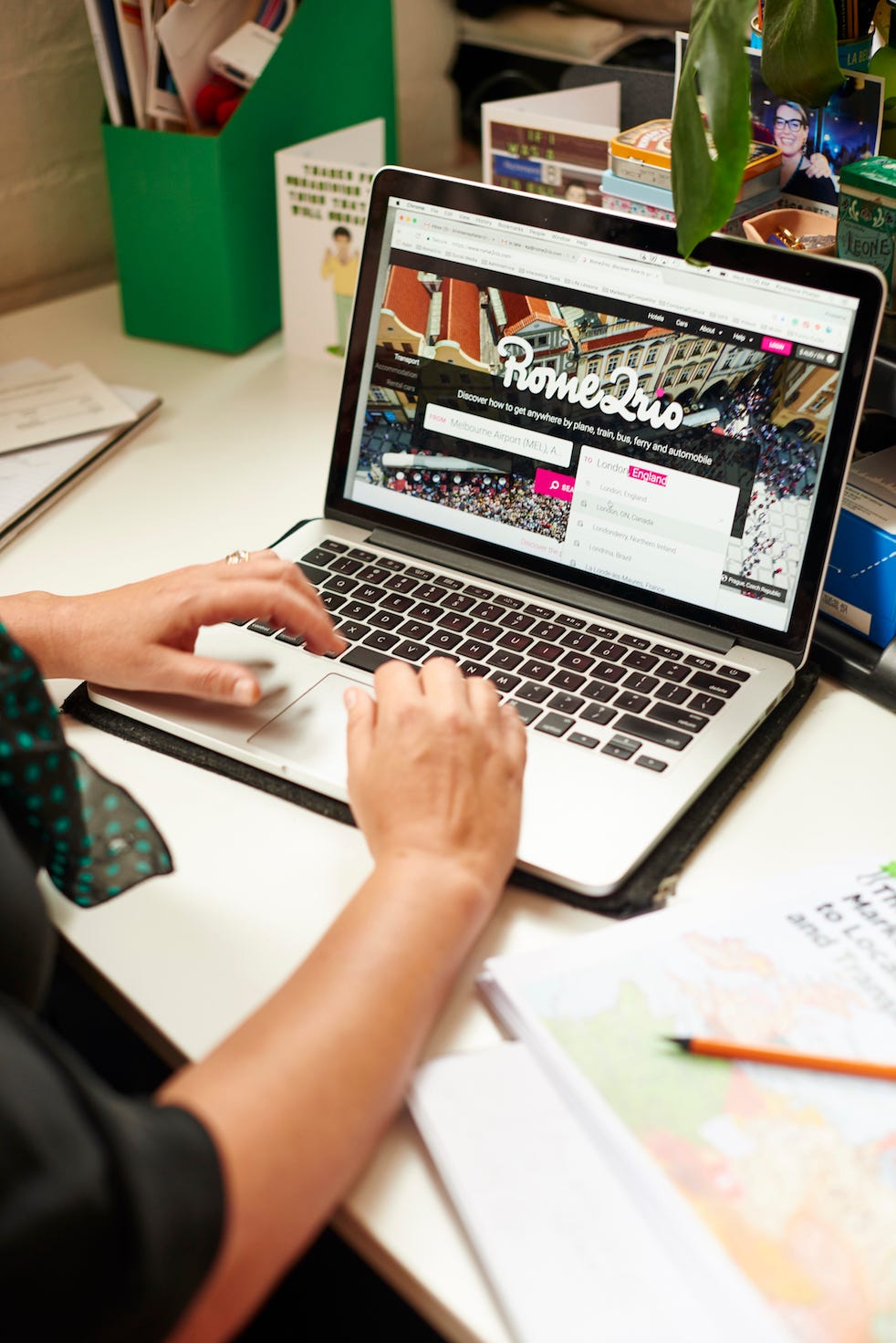
The idea from the beginning was to show users information without a focus on booking. We wanted to be comprehensive, complete, and fast. We’d collect as much information as we could about routes worldwide, build a giant database, and let users search it. The inspiration for me was trying to get from Budapest to Antwerp. Budapest has an airport, but Antwerp doesn’t. I spent about five hours in a hotel room looking up every possible connection. I had a background in search, so I knew this was a graph search problem. If you had all the data, you could answer that query in under a second. What was taking me five hours?
SH: How did you end up at Microsoft in the first place?
MC: It’s one of those things that included connections, luck and timing. I did my PhD at RMIT under a professor named Hugh Williams, who was part of an information retrieval group focused on web search. When Google IPO’d around 2004-05, the search engine wars heated up. Microsoft headhunted Hugh to work on what became Bing. He recruited a bunch of his students, including me.
I’d say I was not a very good software engineer. I was much more of an entrepreneur in retrospect. I spent a lot of time building prototypes, extracting data. Microsoft had access to this amazing BigTable equivalent, a system they’d built called Cosmos, and I was one of the first internal users. I had access to an enormous collection of user data, which I used to improve query correction, spell correction, a bunch of relevance features. I was building cool demos that then got productised. I wasn’t doing quality engineering. I was doing research and ideas. I think I had a lot of impact, but it was very much being at the right time in the right place.
SH: How hard was it to walk away from Microsoft to do a startup?
MC: I loved working there. The energy, the scale, working with smart people. But I didn’t enjoy life in Seattle. The weather bothered me greatly. I missed Melbourne’s grittiness, the high density, the ability to walk or cycle places.
My wife Michelle and I travelled for a year after quitting. We didn’t know until the end of that year whether we’d go back to the US or return to Australia. But one thing weighing on me was: what would I actually do in Melbourne? At the time, the tech scene there, at least as far as I was aware, didn’t have anything like what I’d been working on. This was before 99designs, before Redbubble, before a lot of the consumer tech businesses we know today.
My naive thinking was: I’ll just start something. Bring some of that big-world-thinking culture from the US back to Australia. That project probably would have lasted a few months and I’d have ended up getting a job somewhere, except that when I was back in Seattle pitching the idea to people, Bernie miraculously said he’d join me and move back to Australia too. That’s what turned it from a cute idea into something much more serious.
SH: How did you get the data in the early days? APIs weren’t exactly robust back then.
MC: We just got the data in any way we could. We weren’t relying on official commercial agreements. We were scraping and manually inputting, and we didn’t go to great lengths to get agreements around IP or copyright. We took the approach that whoever provided the data, we’ll link through to them. We’re just sending them traffic. And if anyone complains, we’ll take down their data or logo.
People complained only a couple of times, and we saw it as a good problem to have. Our greatest chance of failure was irrelevance. If we became relevant enough that anyone actually cared how we were getting this data, that was a good problem, and we’d cross that bridge when we came to it.
SH: When did it first feel like it might actually work?
MC: About three years in.
In the early days, Bernie and I had a mindset that we were learning so much about pitching, PR, fundraising, building a product, marketing, commercialisation, that even if the thing failed after a year or two, it was worth it. I should say that upfront, because I think it helped.
But in terms of when it felt like it had real legs, well we had been focused on a B2B licensing model with mixed success. In parallel, we kept working on the consumer product, and one of the key things we did was make sure all our content was backend-rendered so it could be served to the Google bot. That turned out to be critical, because SEO became our primary acquisition channel. There was an enormous latent demand for people trying to get from one place to another.
We started generating millions of pages for different A-B destination pairs. Google indexed them and ranked them higher over time. We saw genuine hockey-stick growth. Then we added a basic Booking.com integration for hotels. The commissions weren’t great at first, maybe 20-30% of Booking’s take. But there was a spark. A flame. An initial amount of money coming in that, combined with the traffic volume we were seeing, made us think okay, this is actually a business. Between 2013 and 2015 it just grew and grew and grew.
SH: You were a transport product making money from accommodation. That seems counterintuitive.
MC: Completely ironic. There’s very little money in transport in the travel industry. The biggest commissions come from accommodation. Our insight was that users travelling to a destination were likely to also need accommodation, so we could serve that up and capitalise on it.
We were very much an informational product. There wasn’t much chance to take substantial commissions on the transport side. But we were getting a huge amount of traffic for free from SEO. The challenge was there was no flywheel. We weren’t making enough per user to spend real money on marketing. There was no way to pour VC capital in and make it grow twice as fast. It was a nice, profitable business, but it was limited by the natural quantity of users we could capture through SEO.
SH: How long before you could pay yourself a salary?
MC: When we raised our second round in 2013, so three years in, we started paying ourselves a salary. Our initial salary was $24,000 a year Australian dollars. We eventually got that up to $36,000. It was only later, when the business became genuinely profitable with a team of 20 to 40 people, that we paid ourselves a proper market salary.
That really was one of the stresses of being a founder. I had two kids. We had given up so much opportunity cost. In the later years, it weighed on me personally. There needed to be a success, a payout, given all the sacrifice.
The first six months of Rome2Rio were built in my parents’ living room. Michelle and I lived with my parents for that six months as well. We got our own place in Richmond just before our first child was born.
SH: I think this is one of the things I’d love to be able to solve for entrepreneurship at a macro scale. There’s just no getting around having to go without a salary for an extended period, and I think that blocks a lot of people from ever starting.
MC: I agree. It’s a mixture of mindset and privilege. Bernie and I both worked at Microsoft, earned good money, and had pretty modest values around spending. So we had a buffer and we were willing to dig into it. But there’s a huge amount of privilege in having that buffer in the first place. It can come from savings, or it can come from knowing that if things really went wrong, your family has your back. The first six months of Rome2Rio being built out of my parents’ living room wasn’t nothing. That was a real safety net.
SH: Was there a co-founder dynamic that worked? You and Bernie stayed together for nine years.
MC: Bernie was an engineer’s engineer. Exceptional, rigorous, brilliant. He’d worked in the developer division at Microsoft, the people who built Visual Studio and developed the .NET language. You cannot meet someone at a higher technical level than those folks. He brought real grounding and depth to Rome2Rio, which was essential because it was an engineering heavy product.
I was more of an entrepreneurial engineer. I could build front-end and back-end, but I moved quicker and the code was not as clean. People would joke in later years about finding remnants of my code and needing to clean it up. But the balance was needed. Bernie built the foundation that allowed us to move into the future, and my “move quick” mentality helped us reach that future by cutting some corners.
As the business grew, I was the one more interested in the people side of hiring and setting direction. Bernie was type B to my type A. That worked. But I think I also found myself enjoying my role less and less as the business grew, because I wasn’t on the tools anymore. I missed being deep in technical problems. It became much more about managing a team, a board, a vision.
SH: You fundraised early and initially struggled. What happened there?
MC: We were two engineers with a product vision, but with none of the commercialisation or marketing figured out. We had some early traction, but this was well before we’d cracked the SEO channel. And I don’t think we were particularly good at selling the sizzle or the vision.
As an engineer by profession, you’re a pessimist. You don’t like to overpromise. You think conservatively. We both had that mindset and it showed.
The startup ecosystem in Melbourne was pretty nascent, and we were a consumer business. There weren’t many B2C success stories in Melbourne at the time. There was the RetailMeNot coupon business founded by Guy King and Bevan Clark, who ended up being our first-round investors along with ClearTrip, a strategic investor out of India. But the list was short.
What ultimately helped us raise was bringing in Rod Cuthbert (founder of Viator) as our CEO then executive chair. He gave us the credibility we needed as he’d done this journey before. He was comfortable leaning forwards on the skis where Bernie and I might have hesitated and worried about wasting someone else’s money. We eventually took back full control when I stepped up as CEO in 2017, largely due to an investor request.
SH: Was there ever a point where you genuinely thought it wasn’t going to work?
MC: Every day, up until the point where I thought it was going to work.
It’s such a roller coaster. I only understand now, in retrospect, what it is. It’s a dopamine ride. The highs and lows, the surprise rewards. It’s like playing the pokies. And if you’re someone who’s neurodivergent then that dopamine is incredibly addictive. You’re constantly chasing some signal of success. Traffic went up slightly today. We managed to hire this person. We met someone who believes in what we’re doing. You’re looking for anything you can grab onto as validation.
And in the background to all of that is just a huge amount of self-doubt. The feeling that this thing is probably not going to work. The belief that the product should exist , so why isn’t it succeeding as a business? I don’t want this thing to die. I didn’t like failing. That drive is the blessing that allows you to build something amazing, and it’s also the curse that eventually leads to founder burnout.
SH: I coach a lot of founders and it’s very common for their emotional state to be completely tied to the business. When the wins are few and far between, that can be really hard.
MC: And that’s the journey. If you don’t want that, don’t become an entrepreneur.
SH: What was the most desperate thing you did to keep the company alive?
MC: In 2017 and 2018 we saw a massive plummet in our SEO rankings, and SEO was 80-90% of our traffic. We went into crisis mode. Eventually, the thing that turned it around was a new landing page experience. Instead of users landing directly on our map view, we added an intermediate page: a simple search box with the origin and destination already filled in, and a search button. That extra step actually improved overall conversions and engagement with the product.
But what it also allowed us to do was add something we called a “pop-under.” When the user hit the search button, the original tab would quietly become Booking.com for that destination. The search results would open in a new tab. Later, when they closed the results tab, they’d find Booking.com already loaded and ready. This turned out to be incredibly effective. The user was already going to that destination. It’s a travel product. Accommodation is our biggest revenue source. We saw a major uptick.
It was deeply unpopular with parts of the team, especially the front-end engineers who were passionate about user experience. There was a checkbox to opt out, but it wasn’t an ideal experience. It was a real moral question for some team members.
To me, it was a clear no-brainer. It might double our revenue. That means we can hire more people and build a better product. And at that moment, it might mean we didn’t have to let people go. But I didn’t have the leadership expertise to move through that tension cleanly. That’s something I’d do better today.
SH: If 2010 Michael, fresh off Bing, encountered this decision, would he have seen it as clearly?
MC: I think it was always clear-cut to me. Money was fuel. Money was what made the whole thing viable. But other people on the team didn’t have that commercial lens. And I suppose this connects back to equity. If the team had been shareholders from earlier on, maybe they’d have been more invested in that commercial reality. Or maybe not. Maybe some people are just purists, and no amount of skin in the game changes that.
SH: What did the entrepreneurial life cost you personally that you didn’t expect?
MC: The burnout. I suffered a serious burnout in early 2018, at the end of the SEO crisis. I was really struggling with the emotion of everything I’d put into getting the business through that period. I wasn’t feeling supported. Feeling the weight of it all on my shoulders. My wife Michelle supported me through that and I’m very grateful.
But I think that burnout had a deeper impact than I realised. It affected how I felt about being an entrepreneur. About working as part of a team. About Melbourne. I think it was genuinely traumatic, and I’m still processing some of it today.
The mechanism is like a crude immune response. That thing burnt me, so don’t do that again. But with more nuance, you can work through it and go: okay, I could found a business again, I just need to avoid the particular circumstances that created that situation. For me, a big part of what broke me was the combination of personal sacrifice over many years, and finding myself as an engineer being pushed further and further from the work I loved. Closer to a kind of pressure I wasn’t built for.
If you have a job and you walk away, you lose a salary and probably find a new one. If you’re a founder, the stakes are so high, financially and personally, that you can’t walk. No matter how much you might not enjoy the job anymore. That’s a unique and brutal kind of trap.
SH: Tell me about the exit. Did you hunt it, or did it come to you?
MC: After the burnout and some time off, Bernie and I had a proper conversation about focusing on selling the business. We’d been at this for eight or nine years. We brought Hugh Williams back into the story (my PhD supervisor, who by then had run all of Google Maps and moved back to Melbourne). He joined the board and helped us run a sale process.
One of the parties we reached out to was Omio, a train, bus, and ferry ticketing platform. Very complementary to us. We were about routes and research, and they were about the booking side. They turned out to be the most interested party, and we negotiated a sale.
The process took about a year and was genuinely hard. Information about the sale was being leaked to employees at a time when we were trying to maintain morale. We’d launched our ESOP in 2017, and one of my big regrets is not doing that earlier. The laws changed to make it tax-effective in 2017, so we launched immediately, but we should have done phantom equity from the very beginning. It would have better aligned incentives, especially through the SEO crisis. As it was, the ESOP came in just before a very tough period, and the valuation had taken a dent by the time we sold. We made sure everyone got back at minimum what they’d put in, but it wasn’t the windfall it should have been. That’s a real regret.
SH: Was it worth it?
MC: Yeah. Absolutely.
I’m so proud of what we built. It still exists. It’s still a great product. There’s still a team of over 100 people in Richmond. It’s something that I’m not sure would have existed if we hadn’t built it. It’s genuinely niche enough that the world might have got by without Rome2Rio. But I think it helped people do more slow travel, consider non-flight options, burn less carbon. Something that’s commercially successful and good for the world is so hard to build. We built it.
And when you put aside the burnout and the stress and the roller coaster, it was an incredible journey. I got to interview and hire 40-odd people I wanted to work with, and then lead that group working on a fun problem together. Especially those years from 2014 to 2016, once we were profitable and the stress had faded, that was just fantastic.
Three Quick Questions
SH: A book we should all read?
MC: The Course of Love by Alain de Botton. Not what you’d expect me to recommend, but it’s probably his best book and I think it’s genuinely important.
SH: A podcast we should all listen to?
MC: Tech Overflow, hosted by Hugh Williams, who I’ve now mentioned four times in this conversation, and Hannah Clayton-Langton, a product director at Aardvark Group in the UK. Really good.
SH: A band or artist we should all listen to?
MC: I’ll go French. Tibz. I can’t give you more specifics than that, other than it’s French!
Rome2Rio is still based in Richmond, Melbourne. You can find it at rome2rio.com.