


👋 Welcome to Valley of Doubt, a free weekly newsletter that goes deep into founder stories from the early days of startups. 🚀
Tom Amos and Jacqui Bull co-founded Sidekicker, a digital marketplace for hiring short-term staff in Australia. After twelve years of relentless execution, they have exited the business to their strategic investor, Seek.
In this interview with Tom, we get into:
Coming up with the idea for Sidekicker
How a lack of technical skills didn’t stop them from getting started
Turning down a million dollars from a prominent Australian VC
Moving quickly to save the business when the economy turned
Scott Handsaker (SH): Tell me who Tom is in 30 seconds or less.
Tom Amos (TA): I'm Tom. I'm a father to Astrid and Gus, husband to Linnea. Since 2012, I've been running Sidekicker, which I founded with my co-founder Jacqui. We recently sold the remaining shares to Seek, so that creates a bit of an identity crisis. You're like, hang on, who am I? Beyond that, I'm passionate about lots of hobbies. I’m a passionate golfer, and I love St. Kilda Football Club. It's handy that Andrew Bassett, who led Seek Ventures who invested in us, also happens to be the president of St. Kilda. So I get to combine two passions in one. I spend a lot of time in the town of Wye River on the Great Ocean Road.
SH: Give me the overview of Sidekicker. What do you do?
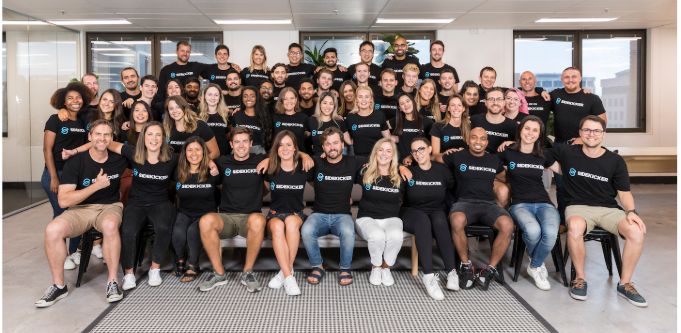
TA: Sidekicker is a digital marketplace for short-term labor. We make it really easy for a business to go on, make a request for a worker to fill a gap in a roster or deal with seasonal peaks. Business makes a request, pre-approved workers are notified, they apply, business selects a favorite, and we handle all the admin. We operate across Australia and New Zealand with around 20,000 sidekicks. Every month we payroll six to seven thousand of them across hospitality, events, warehousing, manufacturing, retail, business support, admin and aged care.
From Tax Accountant to Excel Wireframes
SH: How did you come up with the idea and get started?
TA: I was at Deloitte in their private business advisory area and knew very quickly I wasn't cut out to be a tax accountant. I'm also very bad at admin and domestically focused tasks in general, so I loved the idea of being able to pay someone to do stuff for me. That was the genesis.
I had no idea about tech back then. I had read half of the 4-Hour Work Week.
SH: That is very on brand to only read half of the 4-Hour Work Week.
TA: Exactly. I'd grown up going from high school to uni to a grad job, never having exposure to startups or alternative ways of living. Then I went to New Zealand for work and got friendly with a couple of guys who brought out this beer they'd home-brewed. We're drinking out of big plastic containers at the snow, and two months later they're launching Parrot Dog Beer, selling out all over Wellington. I was like, shit, okay, you can start things!
When I got back to Australia, Deloitte was kind enough to keep my job open for a year. The company back then was called Lend Me A Hand. It was neighbours helping neighbours, so quite similar to TaskRabbit in the US. Jacqui, who would become my co-founder, came on as a marketing intern while still at uni. At the same time a strong competitor in Airtasker launched. So we realized we needed a differentiated model.
That's how Sidekicker was born. We decided to focus on curation, business customers, and speed. No bidding, no browsing. Our model allowed people to get anything done for $29 an hour. We didn't understand marketplaces and dynamics at all. Jacqui and I just put in 25 grand each and got started with no idea what we were doing.
In fact, I wireframed the first version of Sidekicker in Excel.
SH: In Excel?
TA: In Excel. Hyperlinks and everything. We had absolutely no right to succeed. I'm frightened now by how much we didn’t know, but maybe that was a blessing as we didn’t see all the risks. I'm not sure how we managed to get it off the ground, given we had no exposure to technology whatsoever.
The Bootstrap Years: Living Below Minimum Wage
SH: What was your personal runway like when you stepped away from Deloitte?
TA: I could live really poor. I was at Deloitte on maybe $64,000 AUD as a senior analyst, so you're not on much money anyway. You have nothing to really give up or risk. I was 25 and it was just me, so I could live super cheaply.
I got a tax return that was worth maybe six grand and that got me started. I also did jobs on Sidekicker when we launched. I did some bookkeeping jobs, and just did whatever it took to make a couple of grand a month. We had a desk at a co-working space called Inspire9, and the owner Nathan was really good at giving us free rent. It was an amazing community to be involved with and we met so many incredible people. So yeah, we lived cheap for two or three years. I'm talking below minimum wage.
We didn't raise meaningful capital for probably three years, so we just bootstrapped and lived super poor. I don't know how I would do that now.
SH: Do you remember how long it took to pay yourself properly?
TA: It was when we raised our Series A from Seek. So I got a proper salary again in 2016.
SH: So three or four years.
TA: Yeah. I couldn't do that now, but we were very lucky. I think that's a big thing. If you're going to start a company, you have to be prepared for that. If you're not prepared to live poorly, it's hard.
SH: Many parts of entrepreneurship are painful, but one is definitely the fact that you have to go a long time without getting paid. I don't know a good solution to that.
TA: Especially now in Australia where you get to a certain age and you're indebted to your eyeballs just to have a house. It's really hard to take those risks.
The Co-Founder Dynamic
SH: You mentioned co-founding with Jacqui. When you left Deloitte, were you looking for a co-founder?
TA: Jacqui and I knew each other before we teamed up. She attended Monash University where I was president of the Commerce Student Society. We were running an orientation camp and Jacqui and some of her friends came on that. She also joined my team at Deloitte, and we got on really well.
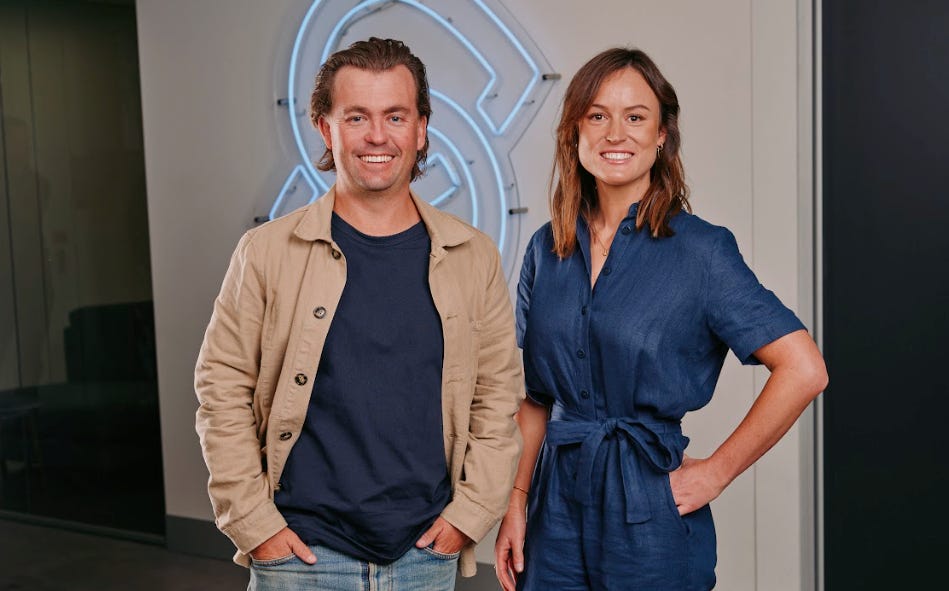
When I had this idea and needed help, I reached out to Jacqui. To her credit, she took a bigger risk than I did. She had a grad job at Deloitte and dumped that to come on a journey with me when neither of us had any idea what we were doing. I got text messages from people at Deloitte saying, "It's fine for you, but what are you doing with Jacqui?" She took a massive gamble.
SH: How did you decide who's doing what, and how has that evolved over time?
TA: Because Jacqui and I have similar skill sets, it could have been problematic. But I'm very proud that we're still friends. I'm actually going to her wedding on Friday!
I think I was always the CEO and Jacqui was very good at respecting that. We never had this fight for control that ruins founding relationships.
We'd divide and conquer. Sidekicker is a two-sided marketplace, so in the early days we'd focus on one side each. We'd be quite comfortable flipping that. I'd probably do more early sales, while Jacqui looked after operations and the supply side. We've been able to navigate our cofounding relationship without too many fights, which I'm really proud of.
The Wild West of Early Fundraising
SH: You talked about those first two or three years as a grind. Did you ever come close to falling over?
TA: Our moments of failure actually happened post-2020 with COVID. In the early days, we were both comfortable having no money, so we didn't have pressure in that regard. And Sidekicker is a pretty compelling idea. It's very hard to scale without a distribution channel, but we could always get enough traction because the idea made sense.
We'd always see this month-on-month improvement. While Sidekicker was a good idea, it was never an idea that was going to go from $100 to a million dollars super quickly. But we could always see strong, steady growth, and that meant it was easy to maintain conviction.
Along with that growth, though, we knew eventually we would have to try and raise money. Back then, raising money was a lot different. We would go to these parties with all these older guys, and I would be trying to raise money from these people. It was the Wild West.
But we had this steady growth so that kept giving us confidence. We grew 400% from 2013 to 2014, albeit from a very small base. We won some good clients like Uber and eventually raised some seed money. We had constant momentum right up until COVID.
The Seek Deal: A Tale of Two Pitches
SH: Can you tell me more about your fundraising journey?
TA: From 2012 to 2016, we probably raised around 400 grand in total. We grew to the size where we were big enough for a Series A, and we had a choice between a traditional VC and Seek Ventures (a corporate VC).
I remember the traditional VC. We had to meet them in Sydney, and being poor a flight to Sydney was still financially painful. We made that trip up there a few times and we thought we were about to get a deal. The final time, I got off the plane in Sydney and the general partner calls me on the phone.
"Hey Tom, we just want to make sure you're ready to pitch again. We've got this new person coming in."
What! I thought we were at the finish line and they want me to pitch again? I was feeling pretty flat.
Almost immediately after that conversation, Simon from Seek calls and tells me,
"Hey, we really like what you're doing. We want to go to term sheets."
SH: That was the morning you were pitching in Sydney?
TA: Yeah. I'm off the plane at 8am, and the VC gives me the news that I’m pitching again. I'm feeling pretty annoyed, and then Simon from Seek calls me straight after.
I'm like, "Hell yeah." These guys know a lot about marketplaces, and they felt really ethical, good folk. So I called up the VC and said,
"Mate, we're out and I’m not coming in. We’ve got a strategic investor, so we're out."
At this stage I hadn't even seen the term sheet from Seek Ventures, but I was just so pissed off that I didn’t care.
SH: You didn't even know what the terms were from Seek?
TA: No. I just thought, if they're going to treat us like this, what's it going to be like working together? By this time the general partner at the VC has started panicking. He calls me back:
"Look, come into our office today, I'll give you a million bucks."
And I'm like, "Nah."
Whether that was the smartest decision or not I don’t know. I probably should have gamed it out a bit more, but at that point I felt the Seek team were really knowledgeable and ran a more transparent and respectful process. I didn't want to play them off against each other. So Jacqui and I went to the Coogee Pavilion and had a pizza and a couple of beers. That was it.
SH: So you flew all the way to Sydney to have pizza and beers?
TA: Yeah. Given we had done three or four years of bootstrapping, we just decided to go with the partner that's really keen and who seem like good people. We probably didn't have the energy to negotiate them against each other. If that was me now, I'd probably play it differently. But we were comfortable with the decision and excited to get a proper salary and capital to execute.
COVID: From Near-Death to Government Contracts
SH: You mentioned you had some moments of failure during Covid. Can you tell me about that?
TA: We were primarily a hospitality and events marketplace, so that went to basically zero. I still remember sitting in the shower, sitting down on the floor going,
"We're fucked. I'm going to have to let a whole bunch of people go."
The idea of letting a staff member go at this point terrified me.
Then I walked into the office and got a call from the Seek representatives on our board. They said, "Hey, don't worry. Don't do anything. We've got you covered." We'd done all the work preparing for layoffs, and they said, "Don't worry about this. Let's take a long-term view." It was such a relief.
A couple of days later, we won a major contract with the Victorian government. We ended up powering the Jobs Victoria program for two years using our technology. That was hell. We had to take our eye off our core business for two years, but it's what we had to do to survive. At the same time, we launched warehousing and healthcare, which started to go really well.
It's only now that we've probably recovered operationally. We went through near-death and then landed a massive contract with the Victorian government. Lots of revenue, but the business pivoted pretty hard.
The 2023 Crisis: From Growth to Bloodbath
SH: Apart from COVID, was there any single crisis that felt like an existential threat?
TA: Yeah 2023 was rough. As the economy started to reopen, our revenue was going ballistic. Our operations were really challenging as we couldn't get workers, so we threw a lot of people at the problem in an attempt to solve it. We hired a whole bunch in operations, product and design. With that also came hiring in support services, which put a lot of pressure on our cost base. It’s insane when I look back now, but at that point in time, we were so focused on supporting our customers and maintaining the growth rates.
At the same time, we were growing really quickly off decent numbers. If you project that forward, all the hiring actually makes sense and you're going to be profitable in nine months. But then the economy flipped and we went from growing 80 to 100% YoY, to negative 20% YoY within a couple of months. Everything we'd planned for just fell apart.
We had to move really quickly to save the business. We made the obvious decisions as quickly as possible, but then over 12 months we worked out what we needed to do to get to the right cost base. We had to do a couple of rounds of layoffs, which obviously isn't great, but we had to solve big operational problems along the way. We were super transparent with our team throughout.
At the end of 2023 to 2024, we had a really empowered and engaged team because people appreciated the transparency. But that was by far the biggest and toughest thing we faced.
The Personal Cost of Leadership
SH: What's something you didn't predict would impact you personally in being an entrepreneur?
TA: Probably the emotional part. You get very obsessed with it. It almost defines you. If Sidekicker is going badly, I'm not as happy. If Sidekicker is going well, I'm stressed about it not going well enough. Plus all the interpersonal stuff with team members. When you grow quickly, you make a lot of mistakes hiring, and that can be pretty niggly. The emotional impact is all-encompassing.
SH: Did you change as a person?
TA: I've changed over the last five years. When you have to make really hard decisions that you know are going to make people feel pretty average, you have to shut down yourself a bit. Because if I thought about the human impact of restructuring the business, where we went from losing money to being profitable within 15 months, I wouldn't do it.
I've probably become a bit more callous, and I'm hoping to shake this off. If I thought about it emotionally, I wouldn't make the decisions. You have to become pretty unemotional about letting go of people you've worked with for an extended period. That was probably the biggest change.
I know everyone says be your authentic self, but that's not always the right answer. The role of the CEO is quite distinct in the company.
Scaling Lessons: The Danger of Getting Too Big
SH: What's the biggest the company got in terms of staff?
TA: Probably 140, which is way too big. I look back on it and wonder what we were thinking? I see startups make the same mistake now. They raise capital and go on hiring sprees.
We probably didn't have the right controls in place. When your revenue is growing quickly and you've got capital it can be easy to hire. These things are always easy in hindsight, but we got way too bloated. I've been surprised at how much more efficient we were able to get, and with better metrics, by having a more lean and disciplined organization.
If I go again with a new company, I'll be way more deliberate with hiring.
SH: What staffing number were you when you sold to Seek?
TA: Probably 60 to 70, which is much more appropriate. In fairness, we were able to reduce headcount through innovation. We used to run onboarding centers where we'd interview every worker, and that was really human intensive. We were able to build a lot of that onboarding into our product, and we also changed the way we did support.
We were forced to be smarter. When you've got cash and you're growing, it can lead to a lack of innovation because you try to solve everything with humans. "We want to onboard more sidekickers? Just hire five workers to onboard sidekicks." It was a real positive for our business to have to focus on being lean. It made us much better by going through that step.
The Strategic Exit
SH: How did you approach the sale with Seek?
TA: It was a long time coming. Everyone knew it made sense. We had a great product that needed distribution. What does Seek have? Distribution.
The co-founder of Seek is Andrew Basset, and he and I have a really good relationship. Very transparent. We were talking about what's needed, and the choice was:
Do we try to raise capital and maybe get someone else on the cap table?
Do we just press on with Seek?
My view was that we should do this acquisition now. So what started as a capital raise turned into an acquisition over about 15 months. When. it finally went through, it was just me sitting there as Jacqui was out on maternity leave. All of a sudden money lands in your account and it's done. You're no longer an owner. It's a really weird feeling.
The Lightning Round
SH: Three wrap-up questions. First: what's a book we should all read?
TA: Shoe Dog from a business standpoint is very good. You realise how similar everyone's journey is. No matter how successful someone gets, you hear the grind they put in. Phil Knight achieved way bigger things, but you can still resonate with a lot of that journey.
SH: What's a podcast we should all listen to?
TA: I'll give a few. I'm a massive golf fan, so No Laying Up is a really good golf podcast. For sports, I like The Howie Games. I really liked the All-In podcast, but it's become too political. I wish they'd just go back to being a business podcast.
SH: Last one: what's an artist or musician we should all listen to?
TA: I'm going to go with something Swedish because I do like Swedish summer music. We head back every year to see Linnea’s family in summer. Every year in Stockholm, because they speak their own language and there's only 10 million of them, there's this really nice community. There'll always be some Swedish artist that breaks out with a summer song.
A guy I used to really not like was Benjamin Ingrosso. The Ingrossos are like the Swedish Kardashians. I used to bag him out all the time, but I listened to some of his music recently and it's actually really good. Very left-field, definitely not my favourite, but give Benjamin Ingrosso a chance.
My actual favourites are more rock and bluesy stuff. Teskey Brothers get a really good play at our house, and The National as well. Quite diverse.
SH: Thanks for your time Tom!